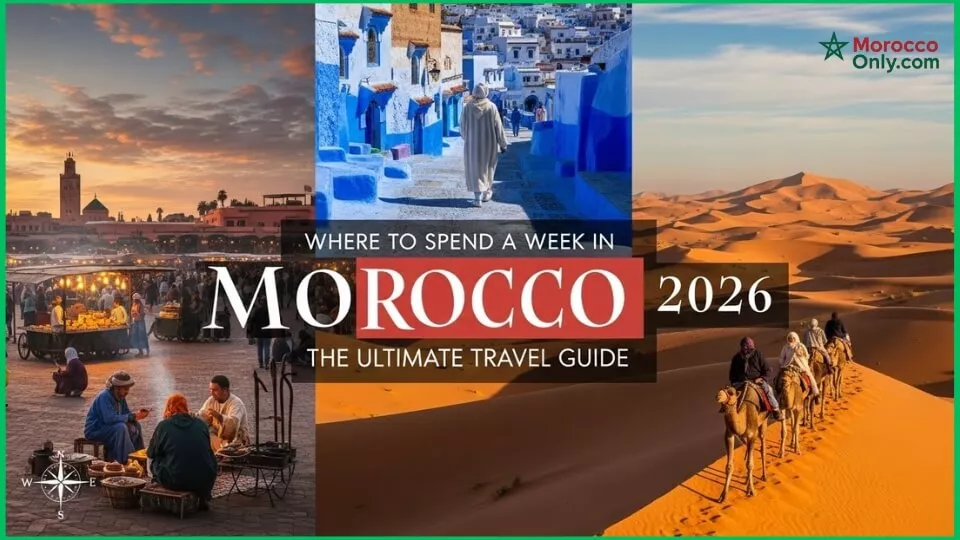
Where to Spend a Week in Morocco 2026: The Travel Guide
Morocco is honestly one of the coolest countries you can visit in 2026 — it’s got everything from ancient medinas and vibrant souks to rolling Sahara dunes, snow-capped Atlas Mountains, and gorgeous Atlantic beaches. And here’s the best part: a week is actually enough time to get a solid taste of it all if you plan smart. You won’t see everything (no one does), but you can hit the highlights, sleep under desert stars, wander blue-painted streets, and eat more tagine than you thought humanly possible. This guide breaks down exactly where to spend your week in Morocco, with three different itinerary styles depending on what kind of traveler you are.
How to Plan a Perfect Week in Morocco
Best Time to Visit Morocco in 2026
Spring (March–May) and Fall (September–November) are hands-down the best times to visit Morocco. Spring brings blooming landscapes, comfortable temps (17-26°C / 63-79°F), and the perfect weather for both desert trips and city exploration. April is especially gorgeous, with minimal rain and mild conditions across the board. Fall offers similar vibes — warm days, cool nights, and way fewer crowds than spring.
Summer (June–August) gets seriously hot, especially in the desert and inland cities like Marrakech and Fes (often hitting 38°C / 100°F+). Many desert camps actually close in July-August because it’s just too extreme. That said, coastal spots like Essaouira stay pleasant year-round thanks to the Atlantic breeze.
Winter (November–February) is budget-friendly with fewer tourists, but desert nights get freezing, and mountain passes can be snowy. If you’re not chasing warmth, it’s actually a cool time to explore cities and cultural sites.
Getting Around Morocco
Trains are your best friend for covering major routes — they’re cheap, comfortable, and connect Casablanca, Rabat, Fes, and Marrakech. A train from Fes to Marrakech costs around 290 Dh (roughly $30), and the ride takes about 7 hours. For shorter distances or less-connected cities, CTM or Supratours buses work well and cost between $6-25 depending on the route.
If you’re doing a desert tour (which you absolutely should), most travelers book a 2-3 day private tour with a driver since the desert isn’t accessible by train. These tours typically cost $40-60/day for the car and driver, plus accommodation and meals. Domestic flights are an option if you’re tight on time — Marrakech to Fes flights run $40-90.
Where to Start Your Trip
Most international flights land in Casablanca (CMN) or Marrakech (RAK). If you’re doing the classic cities-plus-desert route, Marrakech is the ideal starting point since it’s closer to the Sahara and has better tour connections. Casablanca works if you’re flying in/out there, but honestly, it’s more of a modern business hub — skip it unless you really want to see the Hassan II Mosque.
7-Day Morocco Itinerary Options (Choose Your Style)
Option 1: Classic Morocco (Cities + Desert)
Best for: First-time visitors who want the full Morocco experience — bustling medinas, desert sunsets, and ancient kasbahs.
Day 1-2: Marrakech
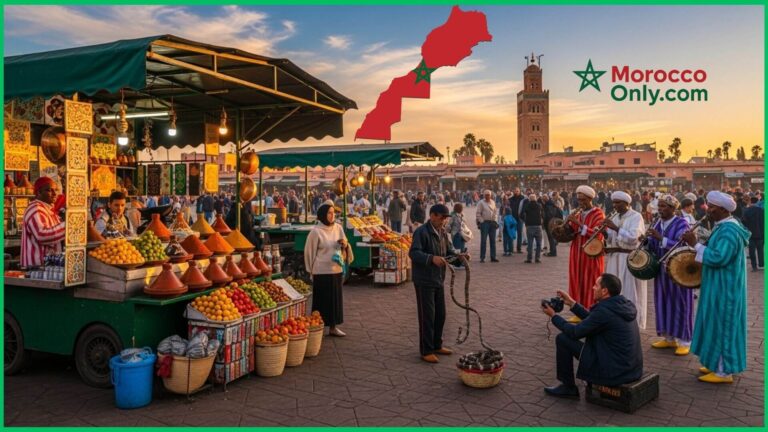
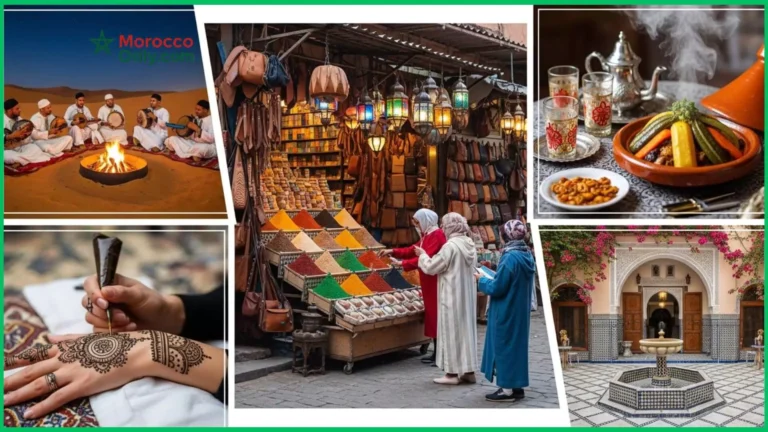
Start in the Red City and dive straight into the chaos (in the best way). Spend your first day exploring Jemaa el-Fnaa square — it’s wild, loud, full of snake charmers, street food, and henna artists. Wander the souks (bring cash and your bargaining skills), then check out the Bahia Palace and Ben Youssef Madrasa for stunning Moroccan architecture. On day two, visit the Majorelle Garden (Yves Saint Laurent’s former garden — super Instagrammable) and the Koutoubia Mosque. Stay in a traditional riad inside the medina for that authentic vibe.
Pro tip: Book a rooftop restaurant for sunset views over the medina.
Day 3-4: Sahara Desert (Merzouga or Zagora)
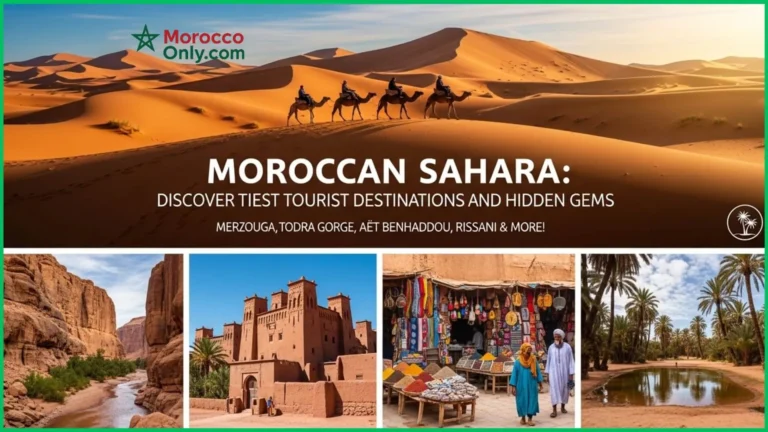
This is where things get epic. Most tours leave Marrakech early and drive through the Atlas Mountains, stopping at the UNESCO-listed Ait Ben Haddou kasbah (the iconic clay fortress you’ve seen in Game of Thrones and Gladiator). You’ll pass through Ouarzazate and the Todra Gorges before reaching the dunes.
Spend the night in a luxury desert camp at Erg Chebbi (Merzouga) — camel trek at sunset, traditional Berber dinner under the stars, drumming around the campfire, and sleeping in a comfy tent with actual beds. Wake up for sunrise over the dunes (it’s ridiculously beautiful) before heading back.
Cost: Expect to pay around $150-300 for a 2-3 day desert tour including transport, meals, and camp.
Day 5: Ouarzazate & Kasbah Route
If you have an extra day, spend it exploring Kasbah Taourirt and the famous Atlas Film Studios in Ouarzazate (where tons of Hollywood movies were filmed). The drive back through the Dades Valley is stunning.
Day 6-7: Fes
End your week in Fes, Morocco’s cultural and spiritual heart. The Fes el-Bali medina is the largest car-free urban zone in the world and feels like stepping back 1,000 years. Don’t miss the Al Quaraouiyine University (the world’s oldest continuously operating university), the tanneries (smelly but fascinating), and endless artisan workshops. Get lost in the souks, eat at local food stalls, and soak up the vibe.
Option 2: Culture & Coast
Best for: Travelers who want a mix of culture and beach time without the long desert drives.
Day 1-2: Marrakech
Same as Option 1 — explore the medina, palaces, gardens, and book a hammam spa experience for ultimate relaxation.
Day 3-4: Essaouira
Take a 3-hour bus ride to the laid-back coastal city of Essaouira. This Atlantic port town has a UNESCO-listed medina, gorgeous beaches, and fresh seafood markets where you can pick your fish and have it grilled on the spot. Wander the blue-and-white streets, watch surfers and kitesurfers, and just chill. It’s the perfect antidote to Marrakech’s intensity.
Day 5-7: Casablanca or Rabat
Head north to Casablanca to see the massive Hassan II Mosque (one of the largest in the world) and experience modern Morocco with its cafes, coastal promenades, and art deco architecture. Alternatively, visit Rabat, the capital, for a quieter, more elegant vibe with historical sites and beautiful gardens.
Option 3: Northern Morocco & Blue Cities
Best for: Photographers, slow travelers, and anyone who wants to skip the desert for mountain villages and coastal charm.
Day 1-2: Tangier
Fly into Tangier on the Mediterranean coast. This port city has a rich history, a beautiful Kasbah Museum, and a thriving cafe culture (it was a hangout for writers like Paul Bowles). Explore the medina, enjoy seafood by the harbor, and soak in the European-meets-African vibe.
Day 3-4: Chefchaouen
Drive 2-3 hours south to Chefchaouen, the famous blue city nestled in the Rif Mountains. Every building is painted shades of blue, making it one of the most photogenic spots in Morocco. Spend your days wandering the streets, shopping for handicrafts, hiking to the Spanish Mosque for sunset views, and just taking it slow.
Day 5-7: Fes
End your week in Fes for deep cultural immersion — explore the medina, try traditional Moroccan dishes at local spots, and experience the artisan culture.
Best Places to Stay for One Week in Morocco
Riads vs hotels vs desert camps
Riads are traditional Moroccan houses with interior courtyards, usually family-run and super charming. They’re perfect for cultural immersion and are often in the heart of medinas. Hotels offer more standardized comfort and amenities like pools and parking. Desert camps range from basic Berber tents to luxury glamping setups with real beds, private bathrooms, and gourmet meals.
Best neighborhoods by city
Marrakech: Stay in the medina for easy access to Jemaa el-Fnaa, or choose Gueliz for a more modern, quieter vibe
Fes: Stay near Bab Boujloud gate for easy medina access
Chefchaouen: Anywhere in the medina is walkable and gorgeous
Budget vs luxury accommodation tips
Budget: Hostels cost 100-250 Dh ($10-25/night), and basic riads start around 400 Dh ($40) for a double
Mid-range: Nice riads with breakfast run 500-900 Dh ($50-90/night)
Luxury: Five-star riads and hotels cost 1,500-3,500 Dh ($150-350+/night)
What to Eat During a Week in Morocco
Must-try Moroccan dishes
Tagine: Slow-cooked stew with meat, veggies, and spices — order it everywhere.
Couscous: Traditionally eaten on Fridays
Harira: Hearty soup, especially good during Ramadan
Pastilla: Sweet and savory pie with pigeon or chicken
Moroccan mint tea: Drink it constantly
Street food vs traditional restaurants
Street food is super cheap — a tagine at a local canteen costs around 50 Dh ($5), and mint tea runs 6-12 Dh ($0.60-1.20). Mid-range restaurants cost around $20/person. For fine dining, budget $50+.
Food safety tips
Stick to busy spots where food is freshly cooked. Avoid tap water (bottled water is cheap). Street food is generally safe if it’s hot and popular with locals.
Morocco Travel Tips for 2026
Currency & payments
Morocco uses the Moroccan Dirham (Dh). ATMs are widely available. Budget travelers spend $25-35/day, mid-range $90-110/day, and luxury $300+/day.
Dress code & cultural etiquette
Morocco is conservative. Cover shoulders and knees, especially in rural areas and religious sites. Women should bring a scarf for mosques. Be respectful, ask before taking photos of people, and always bargain politely in souks.
Language basics
Arabic and Berber are the main languages, but many people speak French. In tourist areas, English is common. Learn a few Arabic phrases: “Salam alaikum” (hello), “Shukran” (thank you), “La shukran” (no thank you).
Safety & scams to avoid
Morocco is generally safe, but watch for common tourist scams: fake guides in medinas, overpriced taxis (use meters or agree on price first), and aggressive vendors. Stay aware in crowded areas and keep valuables secure.
How Much Does a Week in Morocco Cost?
Budget breakdown
Budget traveler: $200-300 for the week ($25-35/day) — hostels, street food, public transport
Mid-range traveler: $700-900 for the week ($90-110/day) — nice riads, mix of restaurants, trains, and tours
Luxury traveler: $2,000-2,500+ for the week ($300-350/day) — five-star hotels, private drivers, fine dining
Average daily expenses
Accommodation: $10-20 (budget), $50-90 (mid-range), $150-350 (luxury)
Food: $10-15 (budget), $20-35 (mid-range), $50+ (luxury)
Transport: $5-10 (budget), $10-20 (mid-range), $40+ (luxury)
Tour vs independent travel costs
Desert tours cost $150-300 for 2-3 days. Independent travel using trains and buses is cheaper but requires more planning. Most first-timers book at least the desert portion as a tour.
Is One Week Enough in Morocco?
What you can realistically see
One week lets you cover either the classic route (Marrakech + Desert + Fes), the coast route (Marrakech + Essaouira + Casablanca), or the north route (Tangier + Chefchaouen + Fes). You’ll get a great introduction, but you won’t see everything.
When to extend to 10-14 days
If you want to do cities + desert + coast + mountains, extend to 10-14 days. This lets you slow down, add more destinations, and truly relax.
Best add-on destinations
Chefchaouen, Essaouira, Rabat, and the Atlas Mountains are all worth extra days if you have time.
Morocco in a week is totally doable and incredibly rewarding if you plan it right. The classic cities-plus-desert route (Marrakech, Sahara, Fes) is perfect for first-timers who want the full Moroccan experience. The culture-and-coast route is ideal for travelers who want to balance medinas with beach time. And the northern blue cities route suits photographers and slow travelers who want mountain charm and Mediterranean vibes.
Whichever route you pick, you’ll leave Morocco with amazing memories, a camera full of photos, and probably a new addiction to mint tea. Book your riads early, pack layers (desert nights get cold!), bring your bargaining skills, and get ready for one of the most colorful, chaotic, and incredible weeks of your life. Morocco is waiting.
FAQs
Is Morocco safe in 2026?
Yes, Morocco is generally very safe for tourists. Stick to tourist areas, watch for pickpockets in crowded medinas, and use common sense. Solo female travelers should dress modestly and avoid walking alone at night in quiet areas.
How much does a 7-day trip to Morocco cost?
Budget travelers spend $200-300 total, mid-range travelers $700-900, and luxury travelers $2,000-2,500+ for the week.
What’s the best time to visit Morocco in 2026?
Spring (March-May) and fall (September-November) offer the best weather for cities and desert trips. Avoid summer if you’re planning desert tours — it’s dangerously hot.
Do I need a visa for Morocco?
Most travelers (US, Canada, EU, Australia, etc.) can visit Morocco visa-free for up to 90 days. Always check current requirements before booking.
Is one week enough to see Morocco?
One week gives you a solid introduction, covering 2-3 major destinations plus a desert tour. For a more relaxed pace or to see more, extend to 10-14 days.
Should I book a desert tour in advance?
Yes, especially in peak season (March-May, September-November). Tours fill up fast, and booking ahead ensures better prices and availability.